Enjoy the Season You Are In

Albany Covered Bridge, New Hampshire Credit: Doug Dickerson

Life starts all over again when it gets crisp in the fall. – F. Scott Fitzgerald

In October, my wife and I took a trip to New Hampshire and Vermont. We officially became what are known as the “leaf peepers.” We stayed in New Hampshire right along the Kancamagus Highway, which was a perfect spot. We relished being leaf peepers, hiking trails, and enjoying warm cider. Our timing couldn’t have been better, as the larger crowds of visitors had moved on after Columbus Day.

Of all the seasons, fall has always been my favorite. October is my birthday month; the page has finally turned from the oppressive South Carolina summer heat, and the cooler, crisp days remind me another season is upon us.

In leadership, as in life, we all go through the various seasons of change. Each one is an opportunity to grow, reflect, and appreciate where we are, and anticipate the future. After some forty-plus years in leadership, I have come to appreciate each one. 

What season are you in? As a football fan, there are only two: 1) Football season 2) Waiting for football season. Everything else is just part of the wait. 

But in leadership, it’s different. Each season brings a unique set of challenges you have to acknowledge. Understanding the different seasons helps as you navigate your leadership journey. Here are some possible leadership seasons you could find yourself in.

The season of planting

In this season, it’s a waiting game. You are building something before you see results. You’ve cast vision, planted seeds, built relationships, and now it’s time to wait. This season teaches us patience and the belief that the seeds will take root and produce a harvest.

Leadership Lesson: Don’t expect a harvest from seeds you just planted.

The season of waiting

Here we learn that leaders can do everything right but will still have to wait on the results. Sometimes longer than anticipated. While many leaders that I know don’t like the wait, the reward will be worth it in the end. 

Leadership Lesson: Just because you don’t see progress doesn’t mean growth isn’t happening.

The season of growth

Here, you learn to manage success without losing your foundation. Opportunities increase, responsibilities expand, and more people depend on your leadership. This is where you learn to appreciate the process. 

Leadership Lesson: The skills that got you here may not be the skills that take you further.

The season of pruning

This is where you, as a leader, have to learn to let go of good things in order to make room for better things. Not every program, habit, relationship, or responsibility should continue forever. 

Leadership Lesson: Sometimes leadership growth requires subtraction, not addition.

The season of storms

In this season, you learn how to deal with setbacks, uncertainty, and crisis. It’s not one we prefer, but one we accept as part of our leadership. Every leader eventually faces unexpected challenges that test their character and judgment.

Leadership Lesson: Storms don’t create character; they reveal it.

The season of harvest

This is where you celebrate the joys of consistent leadership. Years of investing in people, mentoring, coaching, building systems, and making difficult decisions finally produce visible results. What you hoped and prayed for back in the planting season is finally coming to fruition. 

Leadership Lesson: Celebrate the harvest, but remember the people who helped plant the seeds.

Leaders often make the mistake of expecting every season to be a harvest season. But leadership also requires planting, waiting, pruning, and sometimes surviving the winter. The key is not to wish you were in another season, but to lead faithfully in the one you are in. 

©2026 Doug Dickerson

How Keeping Score Harms Your Leadership


Credit: Google Images

To lead others well, we need to build relational connections with people, not use scorekeeping as leverage to control them. – John Maxwell

Over about 12 years, my two daughters played various sports in middle and high school. During those years, we traveled all over the state for basketball, softball, and volleyball games. As it turned out, my wife was the official scorekeeper for those teams. She loved sports, so keeping the books felt natural. As a result, we traveled to every game and drove every backroad imaginable. We lived and died on every pitch, spike, base hit, and layup.

Looking back on those years brings back a lot of fond memories, although I am not so sure I would want to relive them now. Now, it’s my turn to go see the grandkids play their sports. I’ve been promoted, you could say. 

But scorekeeping was essential to the game. Whenever the scoreboard showed a discrepancy, players consulted the scorekeepers. Players checked in with the scorekeeper when entering the game. They served many important functions beyond keeping score. 

In leadership, keeping score is not the same as keeping score during a basketball game. In sports, it’s essential. In leadership, it’s quite detrimental.

Keeping score in leadership parallels John Maxwell’s five levels of leadership, with the lowest level, position, emphasizing rights. 

As a leader clings to their rights, they often become a scorekeeper, too. It’s a terrible trap: when a leader feels they have certain rights, they keep score of perceived wrongs or use it to manipulate others to get their way.

In your leadership, don’t let yourself get caught in the trap of scorekeeping. It’s unhealthy. Instead, choose to rise above it. Here are a few things to know about scorekeeping and how to avoid it.

Scorekeeping turns relationships into transactions

At some point in your leadership, you’ve likely been guilty of this. I know I have. You do something for someone, you buy them a meal, help make a connection, or do them a favor, but when you feel it’s time for the favor to be returned, it isn’t. So you call it due or, worse, throw it back in their face with the proverbial “I did this for you, and this is the thanks I get?” approach. Now, the damage is done. Why? It was all transactional.

When leaders keep score, they turn relationships into transactions and focus on what they can get rather than what they can give. Click To Tweet This will always diminish your leadership and keep you at the lowest level until you outgrow it.

Leadership Principle: When leaders spend their time keeping score, they lose sight of the people they are called to serve.

Scorekeeping creates resentment

This is an unfortunate consequence of leadership. If you keep score of every wrong, every slight, every unreturned favor, every overlooked contribution, and every accolade you thought you were due, you will fill up with anger and resentment. Over time, this only turns into bitterness and eventually eats away at your effectiveness as a leader. 

As long as you hold on to offenses and keep looking at the scorecard, you will eventually reach a point where you no longer function as a leader. When leaders expect something in return for every act of kindness, generosity becomes conditional. Your leadership success is not diminished by someone else’s success. 

Leadership Principle: The highest form of leadership is adding value without demanding repayment. 

The best leaders know when to count results and when to stop counting offenses. They measure what matters, hold people accountable, extend grace, celebrate others, and refuse to turn relationships into transactions.

Are you keeping score of what others have done to you, or are you keeping track of the difference you can make in their lives? Servant leadership and scorekeeping are incompatible with one another. Put away the scorecard and break out the towel.


©2026 Doug Dickerson

Bloom Where You Are Planted

Credit: Google Images

My restless, roaming spirit would not allow me to remain at home very long. – Buffalo Bill

As I look back on more than forty years in leadership, I’ve encountered a few restless spirits who never seem able to anchor down.

They are the restless ones. The distracted. The unfulfilled leaders chasing the next shiny object that has caught their eye.

I have watched this play out numerous times with friends who could never settle down and become effective leaders, not because they weren’t qualified, smart, or talented, but because they were always looking past where they were. And here’s what you need to know: Divided loyalties divide your leadership. If you are not fully present where you are, you will not be fully effective.

I realize extenuating circumstances can cause a leader to look elsewhere or feel restless. Those things happen. But you will never reach your full potential as a leader if you are constantly pulling up stakes instead of growing deeper roots. Here are a few things to consider as you move forward.

Your influence begins where you are

Your leadership begins with the people already around you. Before seeking a larger platform, be faithful with the one you already have. As you remain faithful and committed to being the best leader you can be where you are, opportunities for advancement and promotion will follow. 

Blooming benefits the people around you

Inasmuch as flowers do not bloom for themselves, neither do you as a leader. Your growth as a leader should benefit those around you. When you are planted, you can invest in and pour into the leaders around you. As a result, you improve the environment around you, and others’ growth reflects your deep roots. When you do this, you bring energy and passion to your team instead of draining it. 

Difficult soil can produce strong roots

Hard seasons often develop qualities easy seasons cannot. During this time, you develop resilience, patience, adaptability, humility, and perseverance. Sometimes the place you would rather leave is the very place preparing you for the next. Don’t rush it. Let this season develop, grow, and mature you as a leader so that when you step into the next place, you arrive fully equipped.

Stop comparing your garden to someone else’s

Comparison can make leaders miss the important moments right where they are. When you look past where you are, you’re likely missing opportunities to invest in the growth and development of those around you. As long as you think the grass is greener somewhere else, you will miss the chance to bloom where you are.

Are you willing to bloom where you are planted?


©2026 Doug Dickerson

What’s Draining Your Leadership Energy?

Credit: Google Images

The biggest concern of an organization should be when its most passionate people become quiet. – Tim McClure

I remember last year when I made a special trip to one of my favorite bird sanctuaries. It’s a little over an hour’s drive away, and I was going with much anticipation. It’s a beautiful place, and photographers and bird enthusiasts come from all over to see it. I packed my camera gear and selected and packed the lenses. I was very much looking forward to my time there.

I was just a few minutes into my adventure when the unthinkable happened. The battery light in the viewfinder began blinking. My battery was about to die. My immediate thought was, “How could this be happening to me?” “I never do this!”

But there I was, standing there with my camera and all my gear in tow, and I was about to be finished before I ever really got started. I didn’t charge the battery the night before, and I didn’t pack any spare ones. How could I have forgotten something so basic? It ruined everything.

As leaders, we too must understand that it’s not always the big things that upset the apple cart. Little things, if left unattended, can mess up our day.

Just as many things can drain a camera’s battery life, knowing what drains your leadership battery matters. Things can and will drain you as a leader. Knowing what they are is important.

Knowing what drains you as a leader is a critical self-awareness skill you need to develop. If having an accountability partner helps, get one. But don’t fly solo and miss the warning signs.

What drains you as a leader is something many leaders have to figure out. Here are a few to look out for.

Constant decision-making can drain you

Leaders can easily make hundreds of decisions a day. Think about yours throughout the course of a day or week. How many are really ones you should be making instead of someone else? If someone else can make it, why haven’t you delegated that decision-making to them?

After over 40-years in leadership, here is what I know. Not every decision deserves the same amount of your energy. Create routines for repetitive decision-making. Save your best thinking for the decisions that truly require you.

Power Saving Tip: Don’t spend premium battery power on low-value decisions.

Carrying problems that belong to other people drains you

Good leaders care about people. It ought to be one of the hallmarks of your leadership. But there’s a difference between caring for people and taking on problems the other person needs to learn to fix at work. So let me be clear: caring for your people in their time of personal need is important. Your people need to know you care and that you are present.

When you take on problems that are not yours to solve, it robs you of your time, energy, and focus. The things that belong to you as a leader should be in the top percentile of importance for you and your organization. Click To TweetMake sure what you are devoting your time and energy to isn’t draining you so you can’t give your best in every situation.

Power Saving Tip: Sometimes developing people means resisting the temptation to rescue them.

Trying to please everyone can drain you

This can easily be the biggest leadership battery killer. It’s only natural: you want employees happy, parents happy, board members happy, colleagues happy, family happy, and the list goes on and on.

There’s only one problem. You can’t make everyone happy. Go ahead, read the sentence again. You can’t make everyone happy.

Leadership involves making decisions that not everyone will like. Get used to it. So, if your emotional well-being depends upon everyone approving of your decisions, leadership will constantly exhaust you.

Power Saving Tip: You can listen to everyone without living for everyone’s approval.

Think about your leadership for just a moment and ask yourself these questions: What consistently drains my energy? What am I carrying that really belongs to someone else? Who or what am I allowing to occupy too much of my mental space?

Knowing who or what is draining your leadership energy is the first step in saving it. 


©2026 Doug Dickerson

The 3 C’s of Conversation

Credit: Google Image

A single conversation across the table with a wise man is better than ten years of mere study of books. – Longfellow

One of the most complicated words in most any conversation is the word “fine”. It says nothing, yet says everything if you are picking up on the clues. “Fine” is a complicated word and harder to define. 

You ask your spouse, “How are you?” 

“Fine.”

That could mean everything is wonderful. 

Or, it could mean, “Nothing is wonderful or fine, and if you had half a brain you would know that and you would stop asking.” 

Then there is the dangerous leadership version.

The boss asks, “Does everybody understand what we are doing?”

Everyone nods in the affirmative.

“Any questions?”

Silence.

“Great. Let’s get to work.” 

Thirty minutes later, three people show up with questions that could have been clarified earlier. 

The boss thinks, “I communicated that perfectly”. 

The employee thinks, “I have absolutely no idea what he was talking about.” 

And therein lies the problem. Talking isn’t necessarily having a conversation. Leadership happens when we move beyond simply giving information and start creating understanding.

As this transpires, three things emerge. Allow me to explain them to you.

Conversations create connection

When, as leaders, we communicate to people rather than with them, we are committing a Leadership 101 mistake. Communication is not about you talking to people and walking away hoping for the best. 

Leaders who make time for conversations build trust. And when trust increases, people are more willing to share ideas, admit mistakes, and contribute honestly. Meaningful conversations tell people, “I see you. I value your perspective. What you think matters.”

Leadership Principle: You can’t build strong relationships without meaningful conversations.

Resource: Click this link to read The Leader’s Secret to Connection

Conversations create clarity

Many workplace problems aren’t caused by bad intentions – they are caused by assumptions. One person assumes expectations are understood. Another assumes silence means agreement. Before long, everyone is working from a different version of reality. 

Good leaders use conversations to clarify expectations, address misunderstandings early, give feedback, and make sure everyone knows where they are going and why.

Leadership Principle: What leaders leave unspoken often gets filled with assumptions.

Resource: Click the link to read Why Clarity Matters in Your Leadership

Conversations create community

A group of people can work on the same team, attend the same meetings, and pursue the same goals – and still never become a community.

Community is created when people move beyond simply working beside one another and begin knowing one another. And one of the primary ways is through conversations.

Leadership Principle: Leaders who make time for conversations aren’t wasting time. They’re building relational infrastructure that holds the organization together.

Have you had a meaningful conversation today?

Resource: Click the link to read Building Community in Leadership

©2026 Doug Dickerson

Leadership in Black and White

Photo Courtesy: Doug Dickerson

Leadership is practiced not so much in words as in attitude and in actions. – Harold S. Geneen

As a photographer, there’s nothing I enjoy and appreciate more than the beauty of a black and white picture. When color disappears, distractions disappear with it. And it’s then that we begin to discover things that we might have missed otherwise. Black and white doesn’t necessarily give us less – sometimes it allows us to see more.

And that is one of the great challenges in leadership.

Leadership can be crowded with color: opinions, personalities, expectations, organizational politics, old traditions, and more. Sometimes as a leader, you need to switch the picture to black and white and ask what really matters here. 

Here are a few essentials to understand, along with why they’re important.

Black and white reveals contrast

Without color, contrast becomes more important. 

Light appears brighter because of the surrounding darkness. Shapes become recognizable because one tone stands against another. 

Leadership also requires contrast.

There are times when a leader must distinguish between:

Principle and preference

Mission and method

Activity and accomplishment

Popularity and integrity

What feels good and what is right

Everything cannot have equal weight.

One of the responsibilities of leadership is helping people distinguish between what is good and what is essential.

Leadership Principle: Clarity begins when we learn to distinguish what matters from what merely demands our attention.

Black and white removes distractions

Color naturally attracts the eye. I get it. But when you remove it, we see the composition differently. 

Leadership often needs the same discipline. Organizations accumulate ‘color” in a variety of ways:

Programs

Meetings

Processes

Preferences

Projects

Personalities

None of these are necessarily wrong. But collectively they can make it difficult to see the real picture.

Strong leaders repeatedly ask:

If we removed everything that was distracting us, what would remain?

What is our mission?

Who are we trying to serve?

What are we actually trying to accomplish?

What deserves our best energy?

Leadership Principle: Leadership isn’t always about adding something new. Sometimes leadership is about knowing what to remove.

So the next time someone says to you that you just see everything in black and white, think about this lesson and remember that it can be a good thing. It opens up a whole new way of looking at the challenges that you face as a leader.


©2026 Doug Dickerson

When Every Letter Matters

Old typewriter
Credit: Doug Dickerson

No matter what people tell you, words and ideas can change the world. – Robin Williams

Some time ago, I was in an old store that, among other things, had an old antique typewriter. It instantly brought back memories of my days in college before computers. And yes, this does make me feel rather old.

In those days, especially before working on some major paper, we would have to stock up on paper, white-out, and make sure the ribbon was good before beginning. It was a tedious process, but back in the day, it’s what we did.

The old typewriter I used in college was not as old as the one that is pictured, but it took me down memory lane nonetheless. It also got me to thinking about a few leadership lessons from the typewriter. See if any of these resonate with you.

Every keystroke matters

Back in my college days, we didn’t have the luxury of the backspace or delete button any time we hit the wrong key. We had to be careful and make sure every keystroke was right. Turning in a paper with a bunch of corrections with white-out was not good.

In leadership, this teaches us that our words matter. Every criticism and word of encouragement leaves an impression that people will remember long after you have forgotten them. What marks are you leaving on your team?

There is no delete key

With an old typewriter, my mistakes simply couldn’t disappear. We would have to live with them, or start over.

In leadership, we make mistakes. Great leaders don’t pretend that they never happened; they own them, correct them, and learn from them. People don’t expect perfection; they expect honesty.

One key doesn’t write the story

Every leader has a role. Every team member has a role, and each one is relevant. Remove a few letters from the keyboard and writing becomes difficult. Words are incomplete. Stories are never told.

In leadership, every member of the team matters. Some people receive more attention than others, but every role contributes to the final product. It’s a team win.

The ribbon must be replaced

Eventually, the ribbon on the old typewriters would fade.  Their usefulness would come to an end. The words are still there, but they’re faint and hard to read.

After many years in leadership, here’s what I know: leaders need renewal. Without rest, learning, reflection, and growth, our influence begins to fade. You can’t keep pouring into others if you have stopped investing in yourself.

Speed isn’t everything

A computer can produce pages in a matter of minutes. Technology has forever changed the game. An old typewriter demands a slower pace, and more thought is required for every word.

In leadership, first decisions aren’t always wise decisions. The next time you are in a meeting and everyone is sitting around the table, pay attention to the one speaking last. That’s usually the voice of wisdom. Additionally, some conversations deserve careful thought; some emails shouldn’t be sent immediately. Always remember that wisdom often moves more slowly than urgency.

The sound tells you progress is being made

The rhythmic clicking of the old typewriter is part of the experience. It reminds you that something is being created.

In leadership, progress isn’t always dramatic.

Culture is built one conversation, decision, moment, and act of integrity at a time. Leadership is often the accumulation of small, consistent actions.

Every finished page started blank

Every novel or speech began with a single keystroke.

Every successful organization started with someone’s first courageous step.

Don’t become overwhelmed by the finished product; focus on today’s next right decision.

In closing: remember that an old typewriter teaches us that leadership isn’t about flashy technology or quick fixes. It’s about making each action count, accepting responsibility, consistent effort, and recognizing that every person helps write the story.


©2026 Doug Dickerson

When Your Team Locks Horns

Credit: Doug Dickerson

Respect for ourselves guides our morals, respect for others guides our manners. – Laurence Sterne

Last year, I set out in the pre-dawn hours to photograph some elk in the mountains of East Tennessee. It was fascinating to watch the elk slowly make their way to this meadow and begin grazing. It was a perfect morning to be there, and the elk were plentiful.

One fascinating thing to watch with the elk is when they lock antlers. I have seen this on occasion before, but in the morning fog at sunrise, it was picture-perfect. This is not an uncommon thing to see during mating season, as they are fighting to establish dominance and breeding rights.

As you picture what this morning might have looked like in person, think in real time about the daily culture you experience in your workplace.

There will be times when the people on your team clash over ideas, opinions, and decisions about the direction things should go. If this is your experience, then good for you. You want engaged and thinking people working it out.

One of the most important things for you as a leader to understand is the difference between conflict and accountability. “Conflict is about issues and ideas,” says Patrick Lencioni, “while accountability is about performance and behavior.” As a leader, when you understand this difference, you can lead your team more effectively towards your shared goals and mission.

Along the way, there are a few things that are important to understand for your team’s sake. Allow me to share a few of them with you.

The cost of winning

A leader can readily understand the cost of losing and its immediate impact. That’s an easy one for the most part. But how many leaders understand the cost of winning? This happens when personal wins become more important than team wins. The team pays the price when personal victories become more important than shared success.

On the other hand, when trust is at the forefront of all decisions, constructive conflict and debate can occur within that environment to reach shared goals. One must not confuse personal victories for the sake of ego with shared wins for the team.

Leadership Tip: Leaders and team members need to check their ego at the door if they want to stay healthy.

The cost of holding back

Most leaders can identify unhealthy debate and conflict. And most just want peace and everyone to get along. I get it. They see it as bad for morale and as contributing to an unhealthy culture. But is it?

What if you were to change your perspective and understand that it’s when your team stops pushing back that you should be concerned? Your organization will rarely stall for lack of talent or ideas, but will stall when those talents and ideas are suppressed by those who do not understand the value of healthy debate. 

Leadership Tip: Your team can’t get better if they aren’t given permission to lock horns with each other with integrity and respect.

The cost of accountability 

A misconception for leaders on your team is that their personal wins are good for the team. In some cases, it may be true, but attaining victories at all costs for the sake of a personal win can be damaging. Healthy workplace cultures don’t eliminate disagreement; they encourage it through honest conversations and mutual respect.

“Building a cohesive leadership team is the first critical step that an organization must take if it is to have the best chance at success,” said Lencioni. He is right, and it begins with accountability. 

Leadership Tip: Leaders must get comfortable with what at first seems uncomfortable. It’s the pathway to your success.


©2026 Doug Dickerson

What the Battle of Shiloh Teaches About Leadership


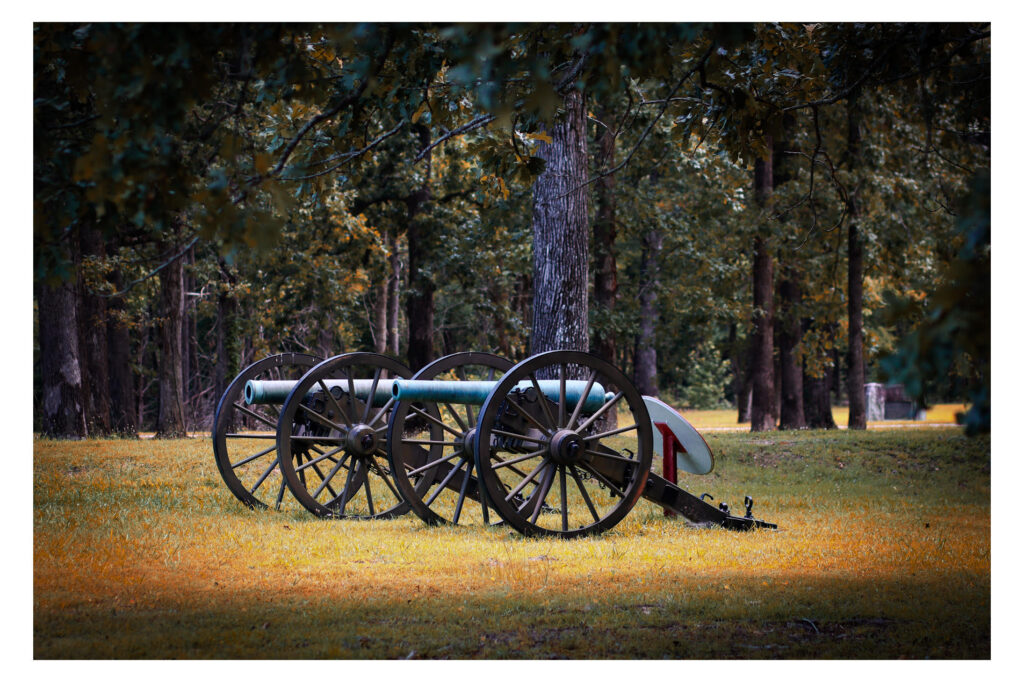
Canons at Shiloh, Credit: Doug Dickerson

Battles are won in the hearts of men. – Vince Lombardi

I was back in my home state of Tennessee recently and spent an afternoon at Shiloh National Military Park. I have been there numerous times, but it has been many years since my last visit. As a history buff, I found it fun to be back and walk the grounds of this significant Civil War battle.

The Battle of Shiloh took place on April 6-7, 1862, and, due to the high casualties, it is considered a turning point in the war. Among the most significant losses in the war was that of Confederate General Albert Johnston, who died from a gunshot wound to the knee. During the battle, nearly twenty-four thousand soldiers from both sides lost their lives. 

The South’s defeat at Shiloh ended the Confederacy’s hopes of blocking the Union advance into Mississippi and ended the Confederates military initiative in the West. With the death of General Johnston, morale plummeted.

The Battle of Shiloh demonstrated courage, decision-making, communication, resilience, and the cost of leadership failures. That hot afternoon reminded me of a few leadership lessons worth sharing.

Never mistake quiet for safety

The Union army camped around Pittsburg Landing, believing Confederate forces were too far away to attack. They relaxed their vigilance and were caught completely by surprise.

Leadership Lesson: Success can create complacency. Good leaders never confuse a lack of current problems with the absence of future threats. Good leaders will ask, “What are we missing?”, stay prepared, and continually evaluate risks. 

Leadership isn’t built during a crisis; it is revealed

The Confederate attack initially overwhelmed the Union forces because many Union camps weren’t prepared for an assault. 

Your advantage as a leader lies in your preparation before pressure arrives. So as a leader, you need to ask yourself: Am I preparing my team for problems before they occur? Are we practicing difficult conversations before we need them? Once the pressure comes, you will either be prepared or you will face certain setbacks. 

One decision can change everything

General Johnston was considered the Confederacy’s finest general. He suffered a gunshot wound behind his right knee and bled out and died.

His death dramatically altered the Confederates’ momentum and was a turning point in the war. 

His death is a reminder that in leadership organizations are often only one decision- or one leader- away from a completely different outcome. This is a reminder of the importance of developing leaders and why leadership development at all levels in your organization is not optional. Neither is succession planning. Are you raising up and training leaders, or are you just hoping for the best? Remember, you are only one decision away from an event that can change everything.

Communication wins or loses momentum

In the 164 years since the Battle of Shiloh, modern communication has advanced dramatically, yet many still struggle with poor communication. 

At Shiloh, commanders struggled with delayed reports, confusion, and incomplete information. Without modern communication equipment, many leaders fought almost blindly.

The issue here isn’t about having more information. It is about making sure the right information reaches the right people at the right time.

A good leader recognizes the value and importance of communication and how it drives momentum. 

“The single biggest problem in communication,” said George Bernard Shaw, “is the illusion that it has taken place”. A good leader knows this and prioritizes strong communication skills to advance momentum.

Leadership lessons are all around us, and the Battle of Shiloh reminds us of what can happen when we lose sight of the basics.


©2026 Doug Dickerson

What Shrimpers Teach Us About Leadership


May be an image of boat
Credit: Doug Dickerson

You can’t change the wind, but you can adjust the sails. – Jimmy Dean

Not long ago, I was back in McClellanville, one of my favorite fishing villages here in South Carolina. This small village boasts a population of around 600-700 residents and is one of the most charming places you will ever visit.

Drive down past the quaint homes, and you will make your way down to a row of shrimp boats moored along Jeremy Creek. Named for a local Sewee Native American chief, Jeremy Creek and its waterfront serve as the community’s primary working waterfront and deep water access to the ocean. The waterfront is the heart of the fishing district and home to some of the friendliest people you will ever meet.

As a photographer and history buff, I never get tired of coming to McClellanville. Its charm, history, people, and waters make this a special place.

My visits have also included conversations with the local shrimpers. They are hard-working, weather-worn, rugged, and are preserving a way of life handed down through the generations. I always enjoy my conversations with them. And it’s from them that I glean a few leadership lessons worth sharing.

Navigate the waters you’re given, not the waters you want

Shrimpers don’t determine the tides, currents, or shrimp movements. Successful shrimpers focus on what they can control: preparation, maintenance, equipment, and instincts gained from being out on the water. Not every day is going to be a perfect day, but every day can be a good day when you plan accordingly.

Leadership Tip: Smart leaders don’t waste much time on things beyond their control. They learn to adapt and find another way. They know that not everything will go their way, and they prepare in advance for the unexpected.

Persistence matters

Shrimpers may spend hours dragging nets with little to show for it before finding a productive area. Persistence and patience are key to playing the long game out on the water. It may not always be glamorous, but persistence makes all the difference in shrimping.

Leadership Tip: Persistence is crucial. Good leaders encourage consistent effort and trust the process over time for results. 

Preventive maintenance prepares you for the unavoidable 

During my time taking pictures, several of the men were working on trawl warps (tow cables) and conducting other inspections on their boat. A shrimp boat will undergo numerous maintenance checks before heading out to the ocean. This would include, but not be limited to, nets, hydraulics, engines, belts, etc.

Leadership Tip: A good leader will invest in people, culture, training, systems, and more. When a crisis occurs, they will be ready. Smart leaders know that the unexpected can and will happen. When it does, they are ready and prepared because they have run through this scenario many times before it ever happened. Smart leaders are prepared to act, not react.

Read the signs others miss

Over time, experienced shrimpers have learned what sets them apart. Novice shrimpers may rely more heavily on sonar and GPS, whereas experienced shrimpers understand water color changes, bird activity, and surface slicks. They build mental maps of mud bottoms, hard shell bottoms, oyster beds, and more. And most importantly, they can handle the weather better. They understand wind shifts and wave formations and can decide to move haul gear or head home hours before a novice realizes that conditions are changing.

Leadership Tip: Good leaders develop situational awareness. They see trends, morale issues, opportunities, and risks before they become obvious to others. 

In many ways, leadership and adaptability go hand in hand. In your leadership, you learn that not every plan is set in stone; conditions change, and if you are going to be successful, you will have to adapt. It’s what smart leaders do. 


©2026 Doug  Dickerson